Telegram Summary
Design Contest
For the 2024 Telegram Design Contest, I developed an AI Summary concept to solve the chaos of active group chats.
My goal was to eliminate the need for endless scrolling. Instead of digging through hundreds of missed messages, users get intelligent topic recaps and easy search, allowing them to catch up on key discussions instantly after being offline.
UI/UX Design, Prototyping
Contestant, Product Designer
Context
About the product
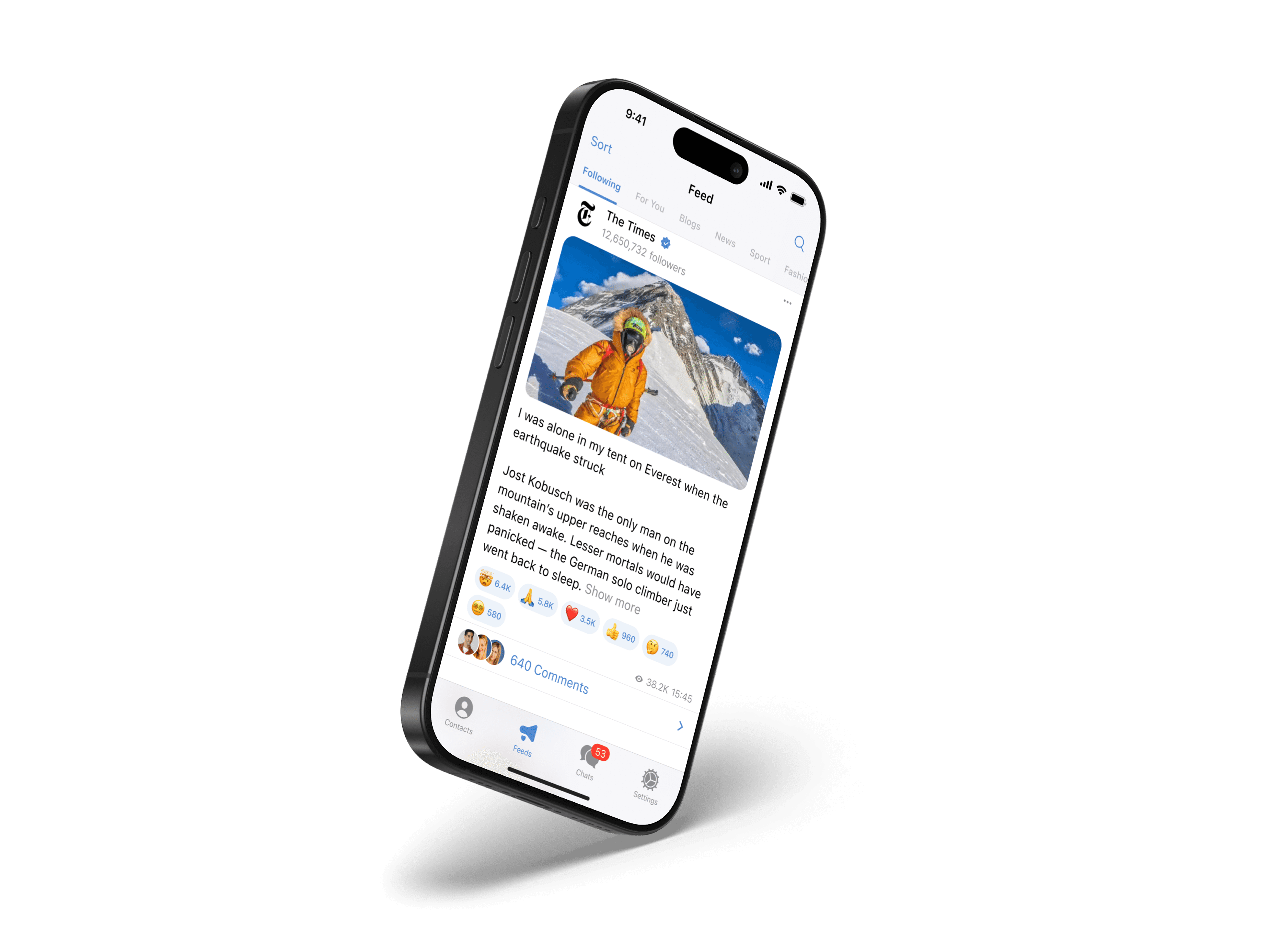
Telegram Groups are powerful collaboration tools used by millions for everything from planning holidays to running businesses. However, structurally, they remain a linear stream. Whether it's a group of 5 friends or a team of 50, every message from important decision to random meme has equal weight and occupies the same space.
Who are we designing for?
I focused on a high-friction scenario: Group Planning (e.g., A Weekend Trip). In this context, users typically fall into two behavioral segments with conflicting struggles:


The core conflict
The interface is designed for Real-Time Chatting, but users are trying to use it for Asynchronous Planning. The result is that meaningful data (decisions) gets lost in the noise (chatter), causing frustration for both the organiser and the participants.
The Problem
The "Wall of Text" Crisis
In active group chats, valuable information (decisions) is inextricably mixed with noise (reactions, stickers, off-topic banter). Users face a high cognitive load trying to extract simple facts like "What time are we meeting?".

Key workarounds
Users currently use three main methods to find information, but they are all inefficient for consensus tracking.
Endless Scrolling
Manually reading through hundreds of missed messages
It creates high cognitive load. Users stop reading and demand a recap, which frustrates active participants
Keyword Search
Searching for a Hotel or a Ticket
Search returns a list of mentions, not decisions. You see 50 messages discussing hotels, but not which one was booked
Pinned Messages
Admins pin key info to the top
Pins become outdated quickly. They can't track a dynamic discussion or voting process in real-time
I hate opening a group chat after work to see 400 unread messages. I know I missed something important, but I don't have the energy to find it
Job Story
Structured Insights
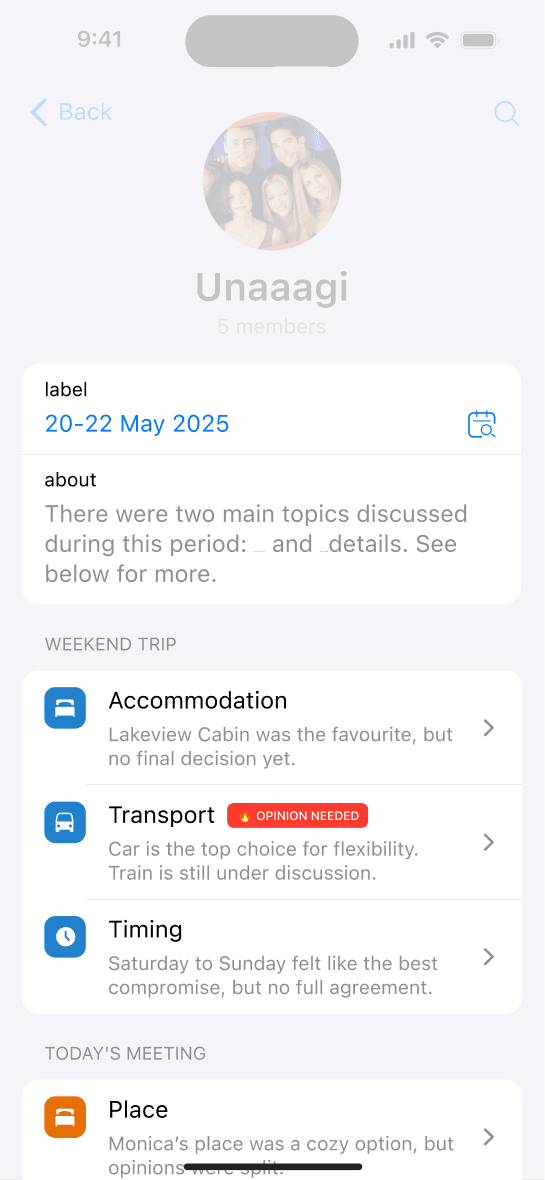
#1 Intelligent Topic Clustering
Moving from a linear timeline to a topic-based view
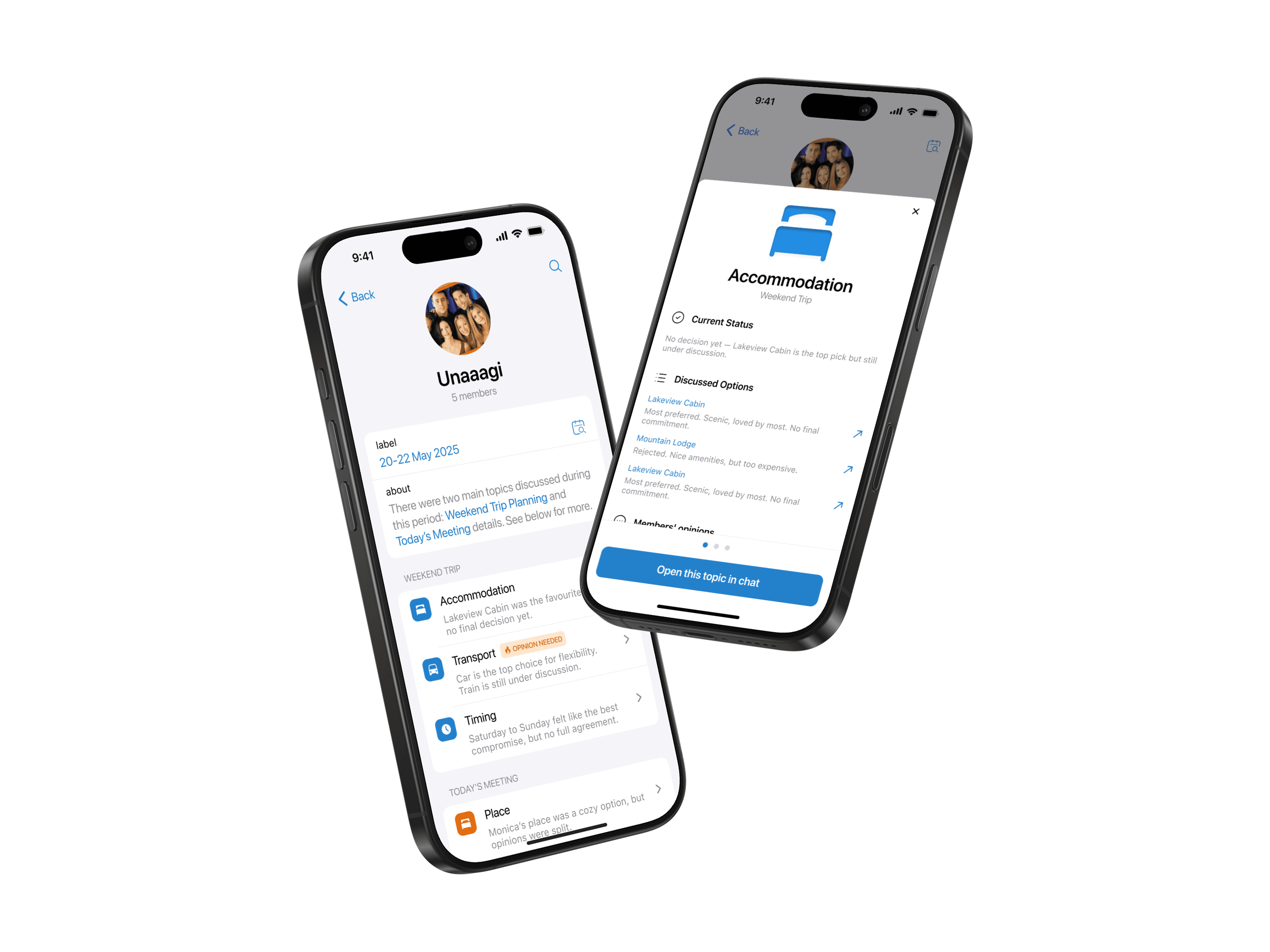
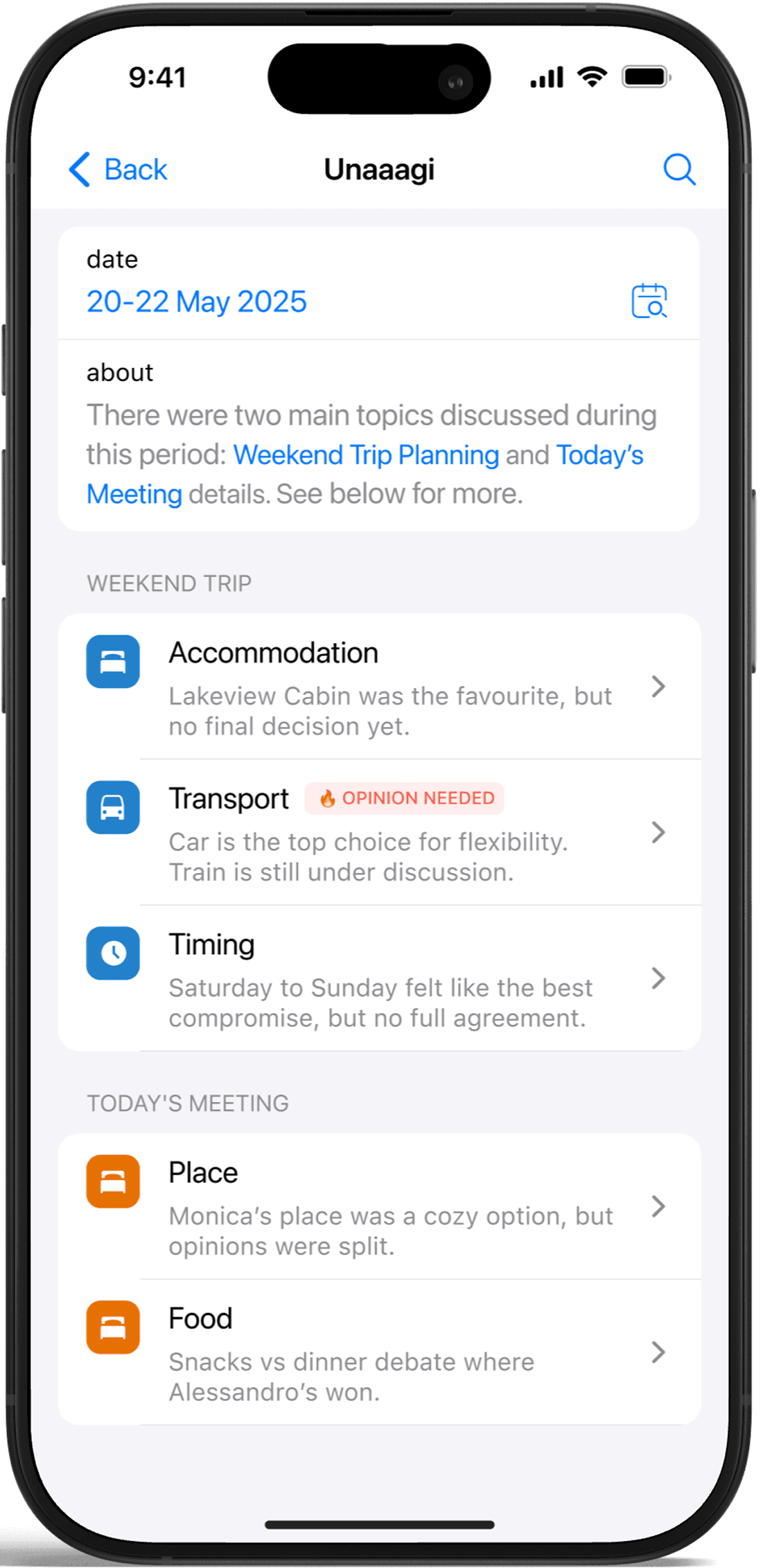
The AI automatically groups related messages (e.g., links to AirBnB, discussions about prices) into a single "Accommodation" card, regardless of when they were sent.
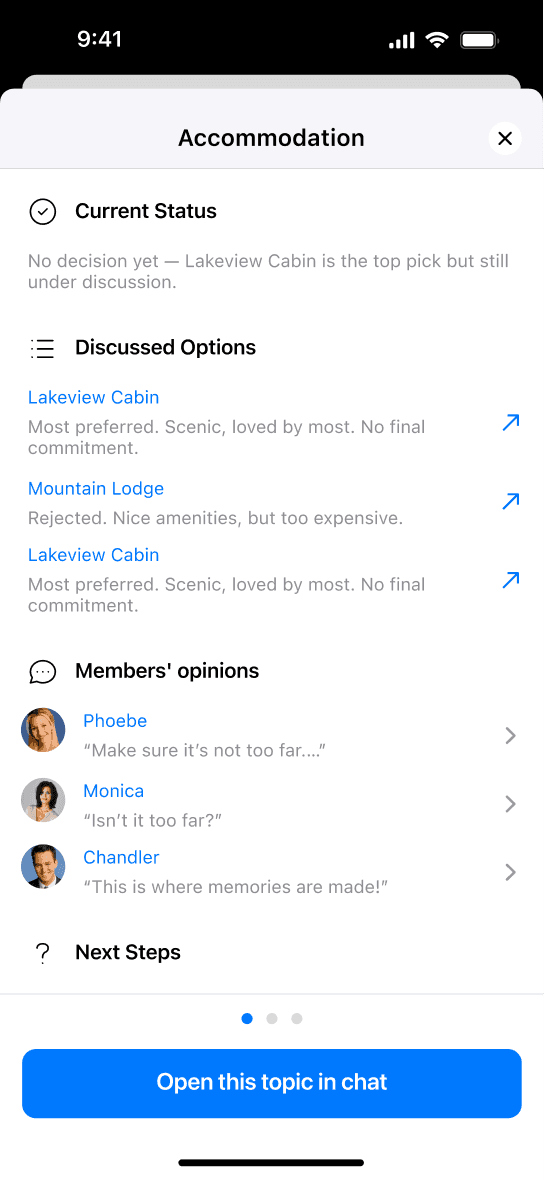
#2 Decision Extraction
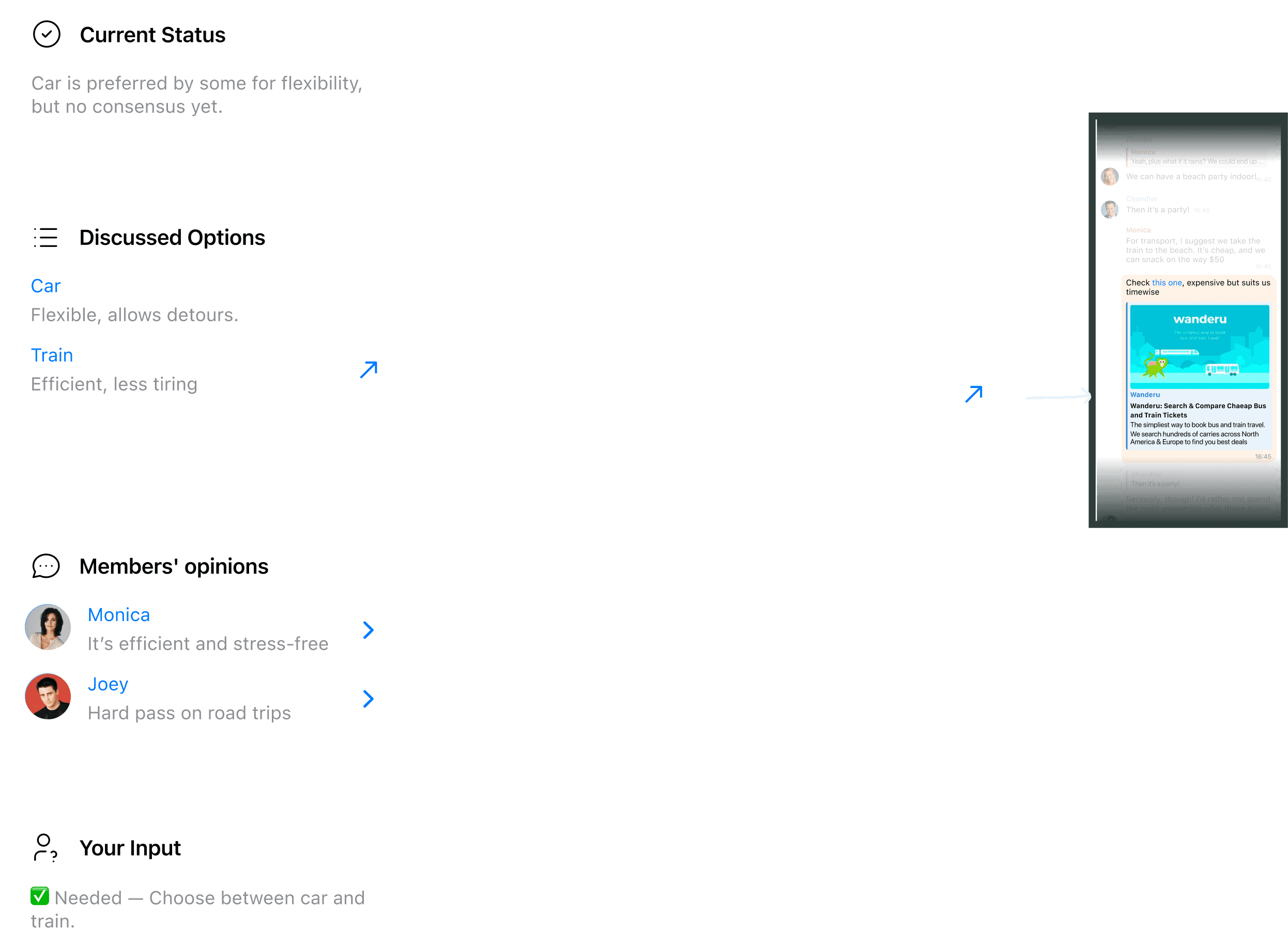
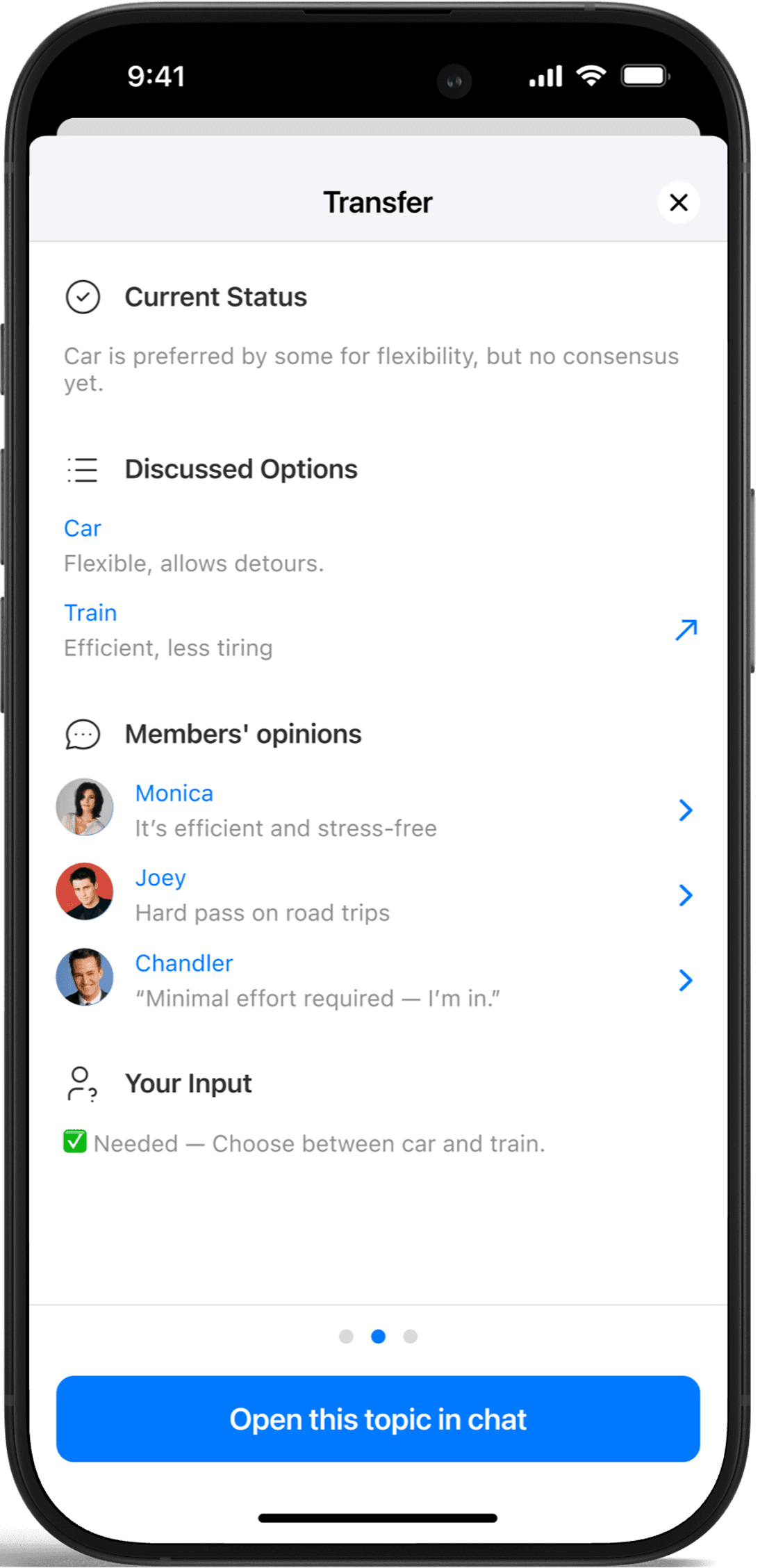
Moving from "what was said" to "what was decided"
It eliminates the tap-back loop. Content is always accessible via a low-friction scroll, and algorithmic suggestions (You might also like) fix the discovery problem
Execution
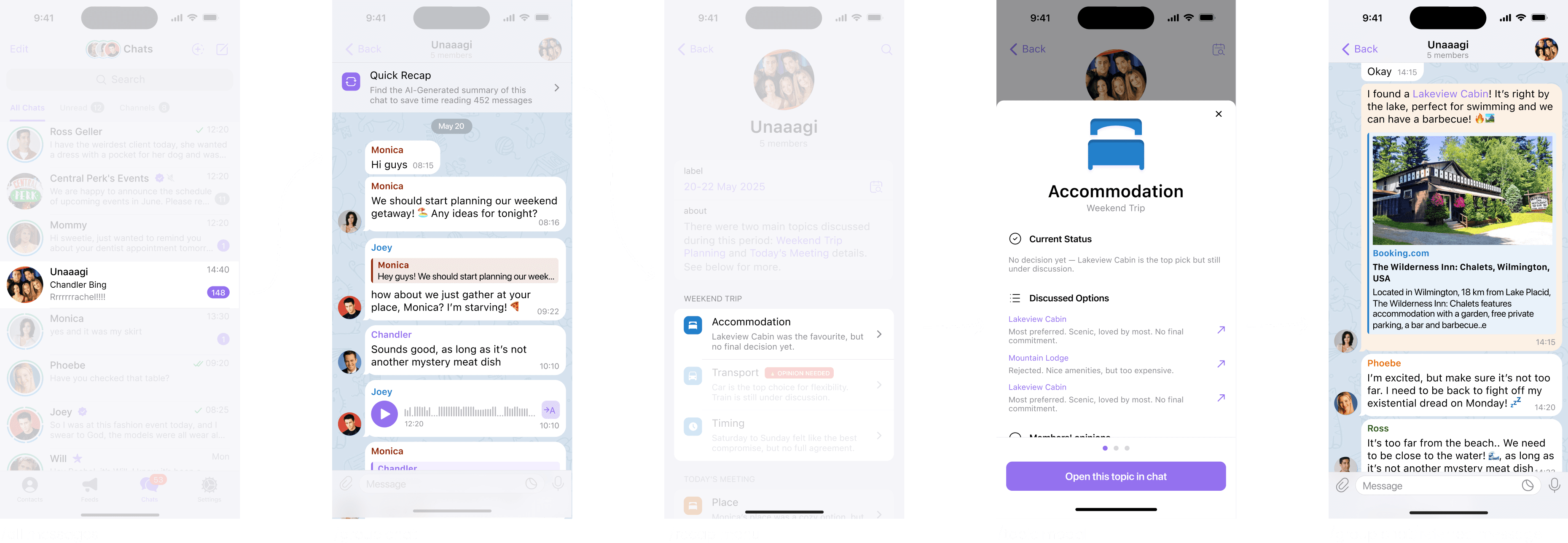
THE FLOW
The user transitions from a cluttered chat stream into a structured, distraction-free interface, and then dives deep into specific decisions.
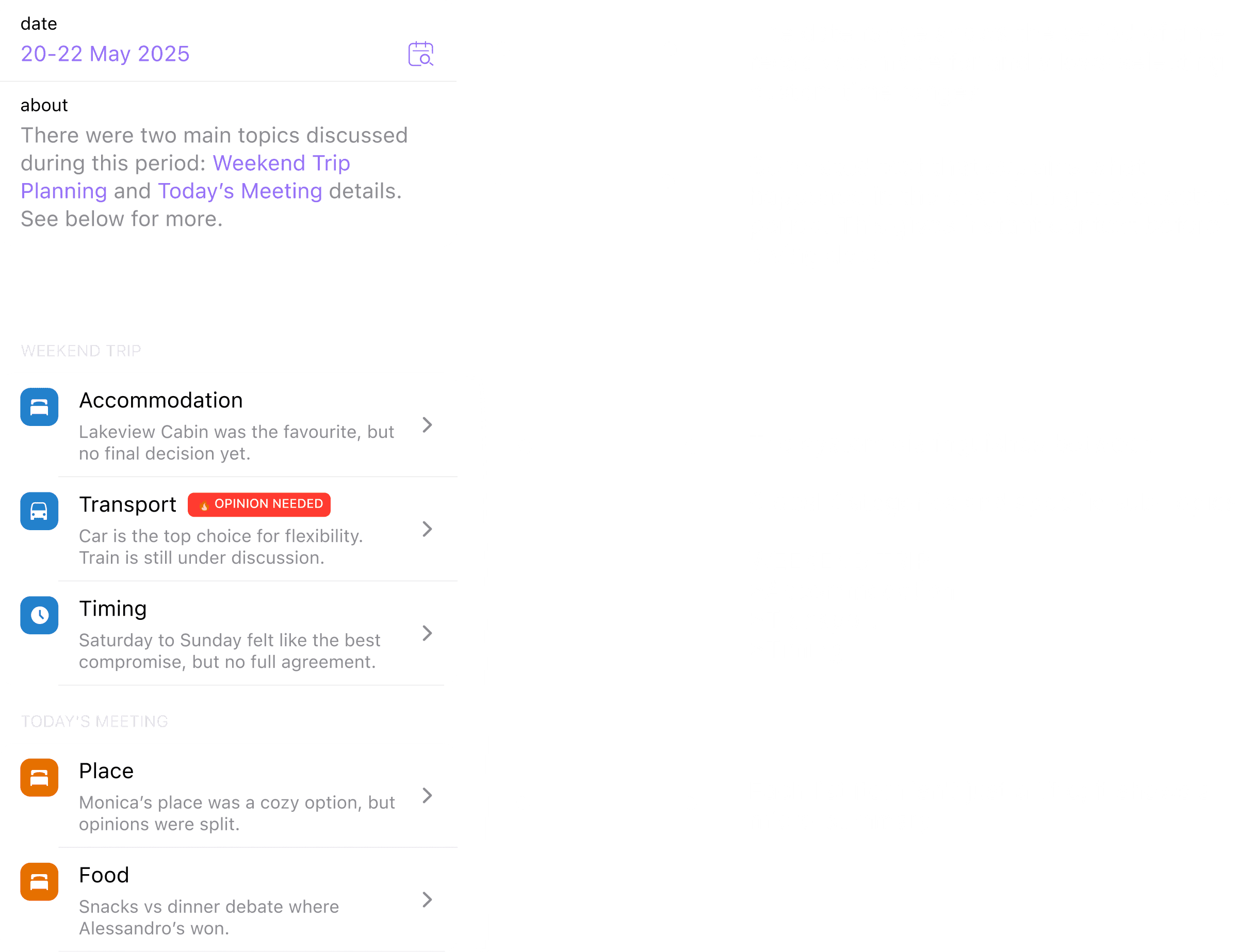
THE RECAP MENU
Instead of a chronological list, the AI organises the conversation history into semantic clusters for quick scanning.
THE TOPIC MODAL
When a user taps a topic, they don't see chat bubbles; they see structured data designed for decision-making.
Search & Scope
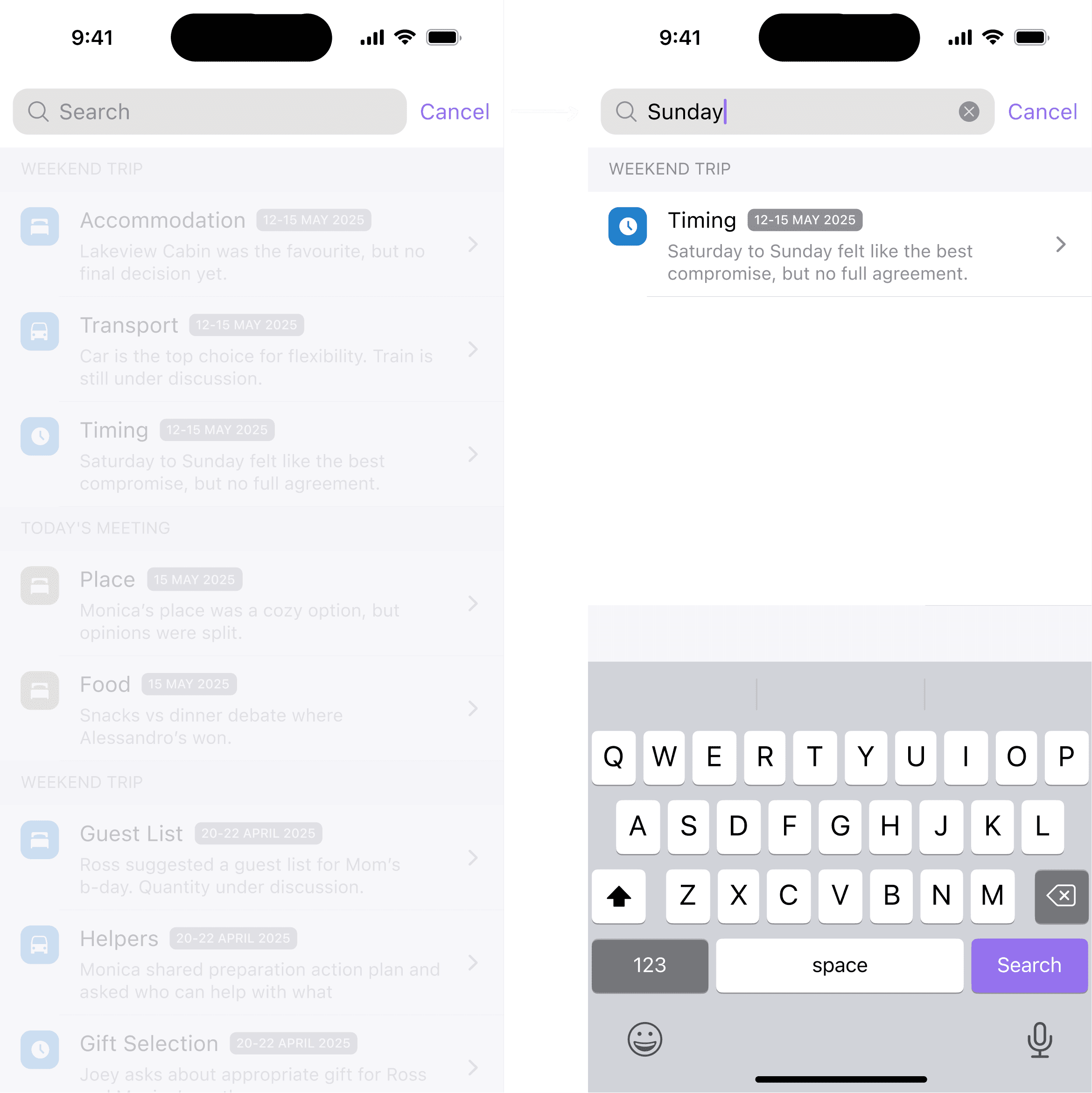
Contextual Search
Unlike standard keyword search, this feature finds topics. Searching for 'Sunday' reveals the entire 'Timing' context instantly
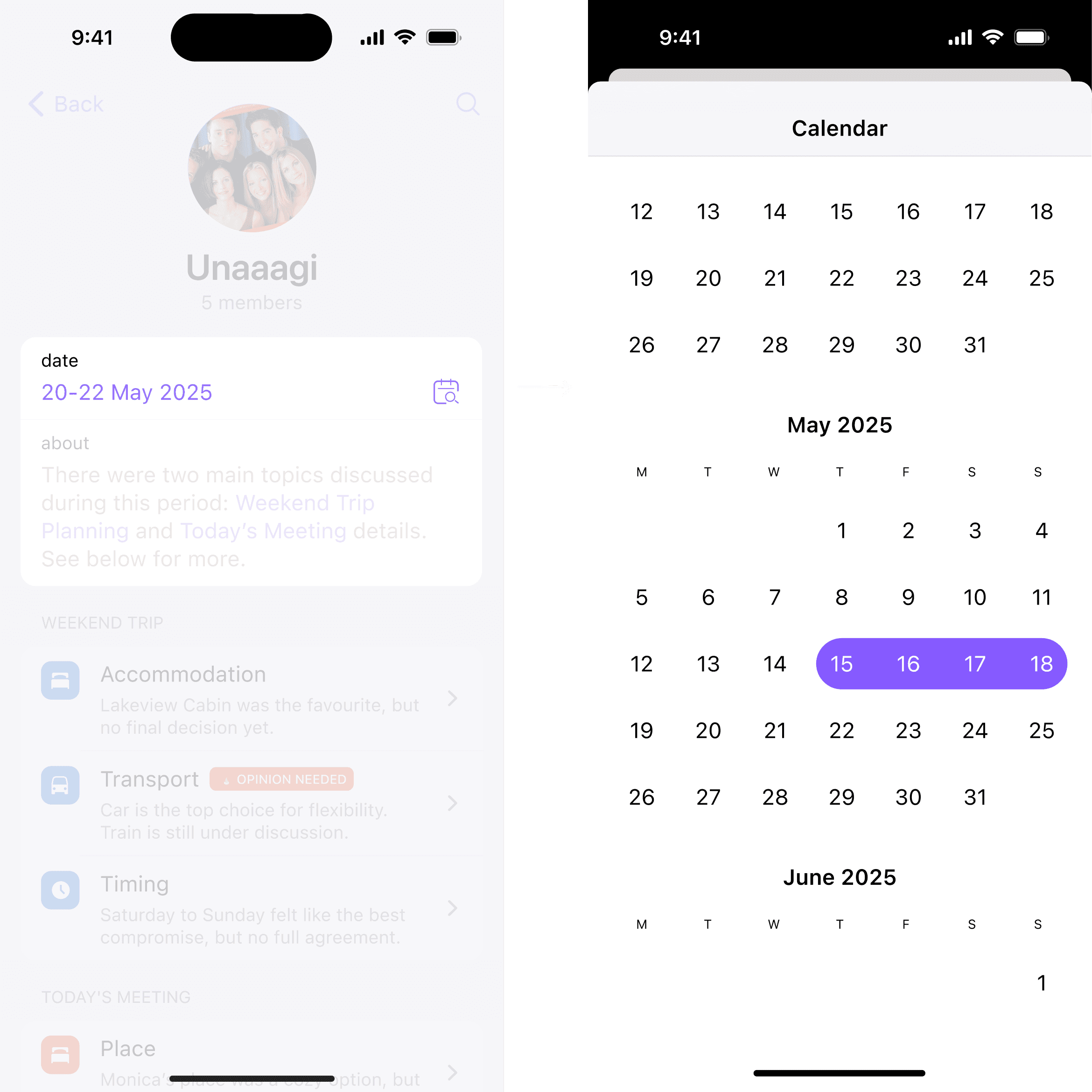
Calendar
Users can define the "Recap Period.
This ensures the summary remains relevant to the user's specific gap in knowledge.
entry points
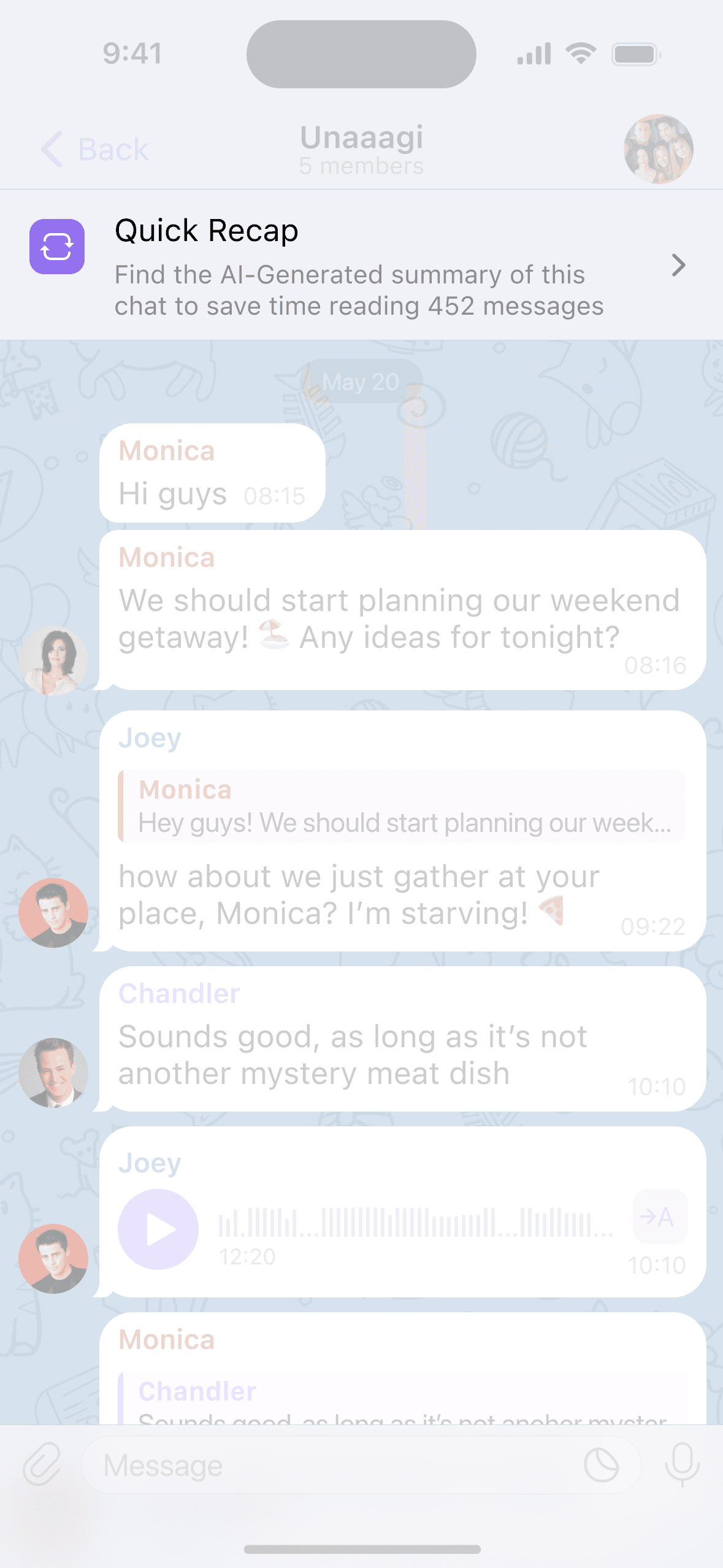
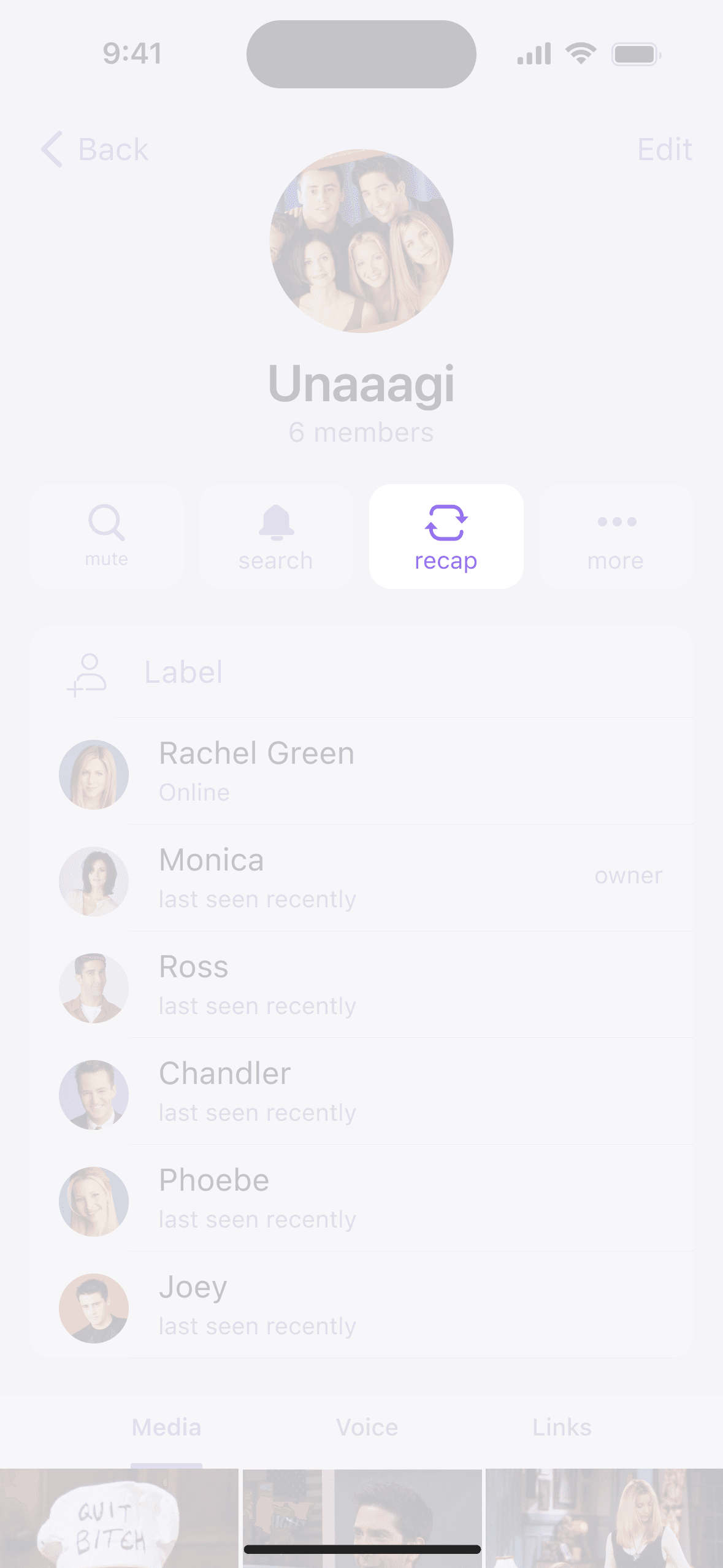
I designed two distinct entry points to cover different scenarios: a сontextual еrigger for immediate relief during catch-up, and a Permanent Action for on-demand access.
In Chat (contextual)
To avoid clutter, the banner is context-aware: it remains hidden and triggers only when scrolling through a significant backlog
It acts as a lifeline at the exact moment of friction, offering an instant exit route from the manual scroll exactly when the user feels overwhelmed.
Group Profile (permanent)
For users who want to find a summary of a past event (e.g., "What did we decide last Tuesday?"), I placed a permanent entry point in the Group Info menu.
It sits alongside standard utilities like Search and Mute, making it easy to find for power users without blocking the main chat view.
Conclusion
FROM NOISE TO CLARITY
I addressed the core conflict of group chats: using a linear stream for complex planning. My solution transforms the mess into a structured database. By using AI to group messages into Topics, I turned chaos into actionable insights.
Key Outcomes
For User
20 minutes of frantic scrolling becomes 30 seconds of calm scanning. The anxiety of "452 unread messages" is replaced by a clear list of decisions
For Business
This is a high-value productivity tool, making it a perfect driver for Telegram Premium Plan. It targets teams and power users willing to pay for efficiency.
Why It Works
This concept proves that Telegram can offer the structure of a project management tool without losing the speed and simplicity of a messenger.